Everything is Now an App
2026/04/25
I watched a donghua “God Troubles Me” in episode 4 of season 1; apps were shown as concubines competing for attention.
Each one wanted more access. Contacts. Notifications. Background activity. Even the ones that had no reason to ask for it, like in the show the camera app was asking for Su Moting’s contacts. And the ones with more access had more power.
That’s exactly how it feels now.
By the way, I recommend you to watch it it’s a really nice show. It currently has 4 seasons with 12 episodes each.
The Shift: Everything Became an App
Phones didn’t become app-centric by accident. They were pushed there.
An app is the perfect control mechanism. It’s not just software. It’s a container. A controlled space where companies decide what you can do, what you can see, and what they can take from you. App stores enforce it. Permissions justify it. And users just accept it.
That’s why everything is turning into an app.
Not because it needs to be.
Because it benefits someone.
An app keeps you inside. No open standards. No alternatives. No easy exit. It’s a direct line to your attention, your data, and your habits. It bypasses the web, bypasses choice, and replaces it with dependency. The moment something becomes an app, it stops being a simple tool and starts becoming a controlled service.
And then it starts asking for things.
A bank doesn’t just have a website anymore. It pushes you into an app.
A camera doesn’t just take photos. It wants contacts.
A basic service turns into a bundle of permissions that make no sense.
You’re not just using a tool anymore. You’re negotiating with it.
And slowly, you lose control.
Because nothing is clear anymore.
There’s no real sense of files. No clear structure. Things don’t behave like they should. You delete something, and it comes back. Settings are buried. Permissions become normal. Notifications don’t stop. Everything is abstracted more than enough that you stop questioning it.
You’re holding the device, but you’re not really in charge of it.
Phones didn’t lose their functions. Those functions got wrapped, fragmented, and handed over to apps that exist to extract more than they provide. What used to be simple is now mediated. What used to be yours is now conditional.
And it doesn’t have to be this way.
Most of what people do on phones could exist as simple functions or through the browser. No lock-in. No unnecessary access. No constant pressure to install something just to do something basic.
But that would mean less control for companies.
So instead, everything becomes an app.
And every app wants a piece of your soul.
Permission Hunger
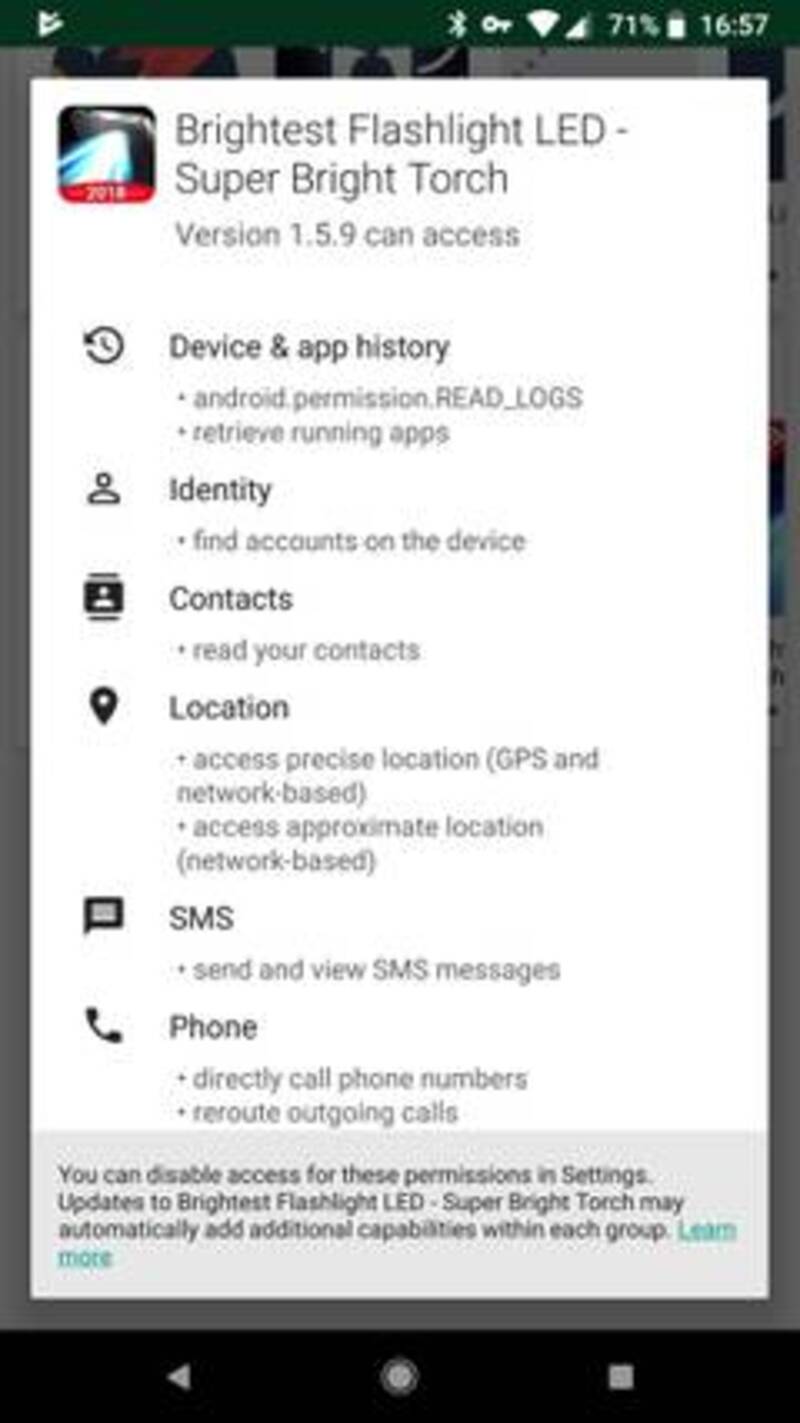
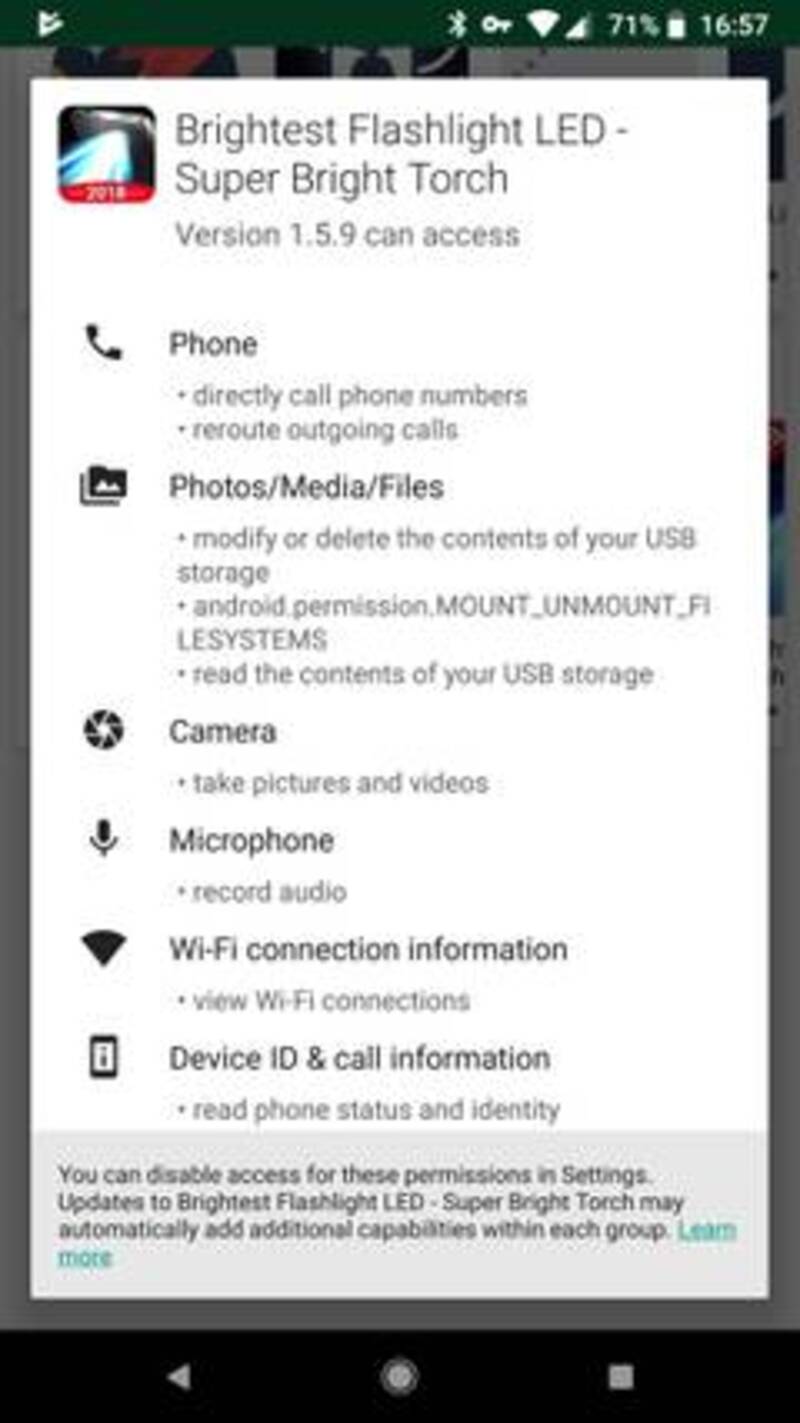
There is no reason a flashlight needs access to your contacts, files, location, microphone, etc, etc.
None.
And yet, it asks.
That’s not a bug. That’s the system working exactly as intended.
Apps don’t just exist to do a job anymore. They exist to expand their reach. The more access they have, the more valuable they become. Not to you—to whoever owns them.
Permissions are supposed to act like boundaries. In reality, they’ve become checkpoints you’re expected to blindly approve.
Want to use this app?
- Give it storage.
- Give it contacts.
- Give it notifications.
- Give it access it cannot possibly justify.
And if you don’t?
You don’t get to use it.
That’s not a permission system. That’s coercion.
Phones love to pretend everything is isolated. That each app lives in its own little box.
It doesn’t.
Apps talk. Through the system, through shared services, through APIs you never see. One app doesn’t need to know everything if another one already does. Access can be indirect. Data can be inferred. Boundaries start to blur the moment you install more than one app.
And suddenly, it’s not about one app having too much access.
It’s about the entire system knowing too much.
Even when restrictions exist, they don’t feel real.
You “deny” a permission, and the app keeps asking. You allow it once, and it keeps it. You uninstall something, and pieces of it still linger.
Nothing feels contained.
Nothing feels limited in its scope.
The idea of a sandbox sounds good on paper. In reality, it feels like a sandbox with open doors, shared tools, and no clear walls. Everything is separated just enough to claim safety, but connected enough to be useful—for the system, not for you.
And the worst part is how normal this has become.
People don’t question it anymore.
- A flashlight asking for contacts.
- A note-taking app asking for location.
- A game asking for everything.
Tap “Allow” and move on.
Because if you don’t, something breaks.
And that’s the pattern.
- Ask for more than necessary.
- Normalize it.
- Punish refusal.
- Repeat until nobody notices.
Attention Warfare
In the donghua, Tianji gets crushed under the weight of notifications from all the different apps.
That is not just a funny exaggeration. That is exactly how it feels now.
Apps do not just exist. They compete.
They compete for your attention, your time, your habit, your reflexes. Every notification is a nudge. Every red badge is a trap. Every vibration is a tiny demand that says, look here, look look!!
And it does not stop at notifications.
If an app can keep you inside it longer, it wins. Infinite scroll. Autoplay. Recommendations. “For you” feeds. Streaks. Rewards. Endless updates. Anything that keeps your finger moving and your brain half-asleep is fair game.
Because attention is not just attention anymore. It is money.
The longer you stay, the more ads you see. The more ads you see, the more likely you are to click. The more you click, the more likely you are to buy. The more you buy, the more valuable you become.
You are not the user. You are the target.
That is why apps feel so restless. They are not satisfied with being opened when needed. They want to stay open. They want to become a habit. They want to sit in your pocket and pull at you until checking them becomes automatic.
And the worst part is how normal this has become.
People call it “engagement” like it is a neutral word. It is not. It is just a polite word for manipulation.
A clean tool gets out of your way. An app never wants to get out of your way.
It wants more.
- More time.
- More clicks.
- More attention.
- More of your sanity.
The FileSystem Lie
This is the part that annoys me the most.
A phone acts like it has files, but it does not let you use them like files. It gives you the illusion of storage without the authority that should come with storage. You can put things in it, move some of them around, and sometimes even delete them, but the device still behaves like the real owner is someone else.
And that is the problem.
A real filesystem is something you can understand. You know where things live. You know how they are organized. You know what was removed, what was moved, and what is still there. The structure belongs to you because you can actually navigate it. On a phone, that relationship is broken on purpose. The filesystem exists underneath, sure, but the user is not allowed to think like the owner of it.
Instead, you get apps, containers, media pickers, hidden paths, scoped storage, and layers of abstraction that turn basic file access into a maze. The result is just absurd. You delete something, and months later it is still sitting there somewhere, just hidden from view. Not gone. Not cleaned up. Just shoved behind the curtain so you stop noticing it.
That is not deletion. That is concealment.
And somehow people are expected to accept this as normal.
Why was it designed this way? Because it benefits the company, not the user. If the platform controls the filesystem, it controls what apps can see, what users can touch, what gets shared, what gets deleted, and what gets buried. The less the user understands the storage layer, the less power they have over the device itself. Confusion is useful. Opacity is useful. A user who cannot see the full structure is easier to manage.
That is the trade. Convenience on the surface, helplessness underneath.
And the cost is real. People stop learning how files work. Children grow up not knowing how to navigate folders because the phone never asked them to. They trained them to open apps, not understand storage. They trained them to consume interfaces, not inspect systems. That matters; because once people stop understanding where their own data lives, they stop expecting control over it.
A phone should not make the user feel dumb for wanting to know where a file is.
It should not make deletion feel fake.
It should not turn storage into a managed illusion.
But that is what happens when the device is designed around app control instead of user authority.
The filesystem still exists. You are just not the one allowed to own it.
The Real Authorities
There are many powers above the user. And none of them answer to you.
First comes the platform owner. Google or Apple.
They define the operating system. They decide what is allowed, what is restricted, what gets updated, what gets broken, and what quietly changes without asking you. They set the rules of the entire environment.
Then comes the gatekeeper.
The App Stores.
This is where control becomes enforcement. Apps are approved, rejected, removed, or restricted based on rules you did not write. Something can exist one day and disappear the next. Software you rely on can be taken away remotely.
Then comes the OEM.
The company that made your phone adds its own layer. Preinstalled apps. Modified interfaces. Hidden services. Some ads. Some restrictions. They shape the device before you even turn it on.
Then comes the Carrier.
Another layer of control. Network restrictions. Locked features. Delayed updates. Configuration you never asked for.
And above all of this sits something even less visible.
Your Account.
Your data is not just on your phone anymore. It is synced, backed up, mirrored, and stored elsewhere. Even if you control the device, you do not fully control where your data exists.
Plus your account can be deleted, suspended or restricted. Anytime the real owners decide to do so.
By the time all of that is done, the user is left with the illusion of ownership.
You bought the phone. But you do not control the stack.
Ownership without authority is just a rental with better branding.
That is the part people keep missing.
These companies sit above the user with far more authority than the user ever gets over their own device. If they decide to push an update, you get it. If they decide to remove a feature, you lose it. If they decide to lock down behavior, you adapt. If they decide to push a policy through an app store, you comply or you are out.
And if one of them gets compromised or just decides to screw you up, the damage is not small. It is catastrophic.
There was a developer who lost access to 20 years of his digital life because his Apple account got flagged by an automated system. Photos, messages, purchases, even his developer account—gone. See
No clear reason. No real help. No control.
He was told to just create a new account.
Start over.
That’s what “ownership” looks like now.
Because these devices do not just hold “apps.” They hold photos, messages, accounts, locations, contacts, backups, tokens, history, identity fragments, and whatever else has been quietly pulled in over time. The phone is no longer a simple machine with files you understand. It is a layered system of permissions and abstractions, connected to services you do not fully control and often do not fully see.
So when people say, “it is fine, just trust the platform,” I really wanna laugh out loud in front their face.
Trust who?
- The company that can lock you out?
- The manufacturer that can preloads whatever it wants?
- The carrier that can meddle with the device level experience?
- The ecosystem that can sync, store, and replicate data in places you never can meaningfully inspect?
That is not ownership. That is permission to keep using something that someone else actually owns.
And that is before you even get to the weird truth that deleting something does not always mean it is gone. Because on these systems, “deleted” can mean to hidden, cached, backed up, mirrored, synced, or still sitting somewhere behind layers of software you never asked to exist. The device tells you one story. The system tells another. The user is expected to believe the first one and stop looking.
That is the game.
You are handed a phone and told it is yours, while every important layer above you quietly makes sure that is only true in the most technical, useless sense possible.
The Real Problem
Abstraction removes understanding. That is the first damage.
The user stops seeing how the system works, so they stop thinking in terms of control and start thinking in terms of whatever the interface tells them to do. They no longer know where things are, what is happening behind the screen, or what is being hidden from them. The machine becomes a black box, and that black box becomes normal.
Then control gets replaced with convenience.
And that sounds harmless until you realize convenience is often just another word for surrender. It is easier to tap “Allow” than to understand why the app wants access. It is easier to install the thing than to ask whether the thing should exist at all. It is easier to accept the default than to question who chose the default and why.
That is how users become passive.
Not because they are stupid. Because the system is built to make passivity feel natural.
The less people understand, the less they resist. The less they resist, the more can be pushed through. The more can be pushed through, the more profitable the system becomes.
And companies know this.
A user who understands a system is harder to manipulate. They question permissions. They question pricing. They question dark patterns, subscriptions, forced apps, fake “features,” and all the other nonsense being sold as progress. But a passive user? A passive user is easy. Easy to nudge. Easy to confuse. Easy to lock in. Easy to convince that they need something they never asked for.
That is why the system keeps getting more opaque.
Not because it has to. But because it pays.
A confused user is more likely to accept terms they never read, buy features they do not need, and pay for layers of convenience that exist mainly to extract money and attention from them. They are easier to funnel, easier to trap, easier to market to, easier to keep in the loop.
And once the user no longer understands the system, the system no longer has to respect the user.
That is the real rot.
- Not just that phones have become app-centric.
- Not just that apps fight for attention.
- Not just that permissions are abused.
It is that all of it works better the less you understand what is happening to you.
And that is exactly why it keeps happening.
“The user should be in control of the program. If the program controls the user, it’s not really computing.” — Richard Stallman
Right now, it doesn’t feel like we’re in control of anything.I watched a donghua “God Troubles Me” in episode 4 of season 1; apps were shown as concubines competing for attention.
Each one wanted more access. Contacts. Notifications. Background activity. Even the ones that had no reason to ask for it, like in the show the camera app was asking for Su Moting’s contacts. And the ones with more access had more power.
That’s exactly how it feels now.
By the way, I recommend you to watch it it’s a really nice show. It currently has 4 seasons with 12 episodes each.
## The Shift: Everything Became an App Phones didn’t become **app-centric** by accident. They were pushed there.
An app is the perfect control mechanism. It’s not just software. It’s a container. A controlled space where companies decide what you can do, what you can see, and what they can take from you. App stores enforce it. Permissions justify it. And users just accept it.
That’s why everything is turning into an app.
Not because it needs to be.
Because it benefits someone.
An app keeps you inside. No open standards. No alternatives. No easy exit. It’s a direct line to your attention, your data, and your habits. It bypasses the web, bypasses choice, and replaces it with dependency. The moment something becomes an app, it stops being a simple tool and starts becoming a controlled service.
And then it starts asking for things.
A bank doesn’t just have a website anymore. It pushes you into an app.
A camera doesn’t just take photos. It wants contacts.
A basic service turns into a bundle of permissions that make no sense.
You’re not just using a tool anymore. You’re negotiating with it.
And slowly, you lose control.
Because nothing is clear anymore.
There’s no real sense of files. No clear structure. Things don’t behave like they should. You delete something, and it comes back. Settings are buried. Permissions become normal. Notifications don’t stop. Everything is abstracted more than enough that you stop questioning it.
You’re holding the device, but you’re not really in charge of it.
Phones didn’t lose their functions. Those functions got wrapped, fragmented, and handed over to apps that exist to extract more than they provide. What used to be simple is now mediated. What used to be yours is now conditional.
And it doesn’t have to be this way.
Most of what people do on phones could exist as simple functions or through the browser. No lock-in. No unnecessary access. No constant pressure to install something just to do something basic.
But that would mean less control for companies.
So instead, everything becomes an app.
And every app wants a piece of your soul.
Permission Hunger
![[Flashlight-Permissions-1.jpg]] ![[Flashlight-Permissions-2.jpg]]
There is no reason a flashlight needs access to your contacts, files, location, microphone, etc, etc.
None.
And yet, it asks.
That’s not a bug. That’s the system working exactly as intended.
Apps don’t just exist to do a job anymore. They exist to expand their reach. The more access they have, the more valuable they become. Not to you—to whoever owns them.
Permissions are supposed to act like boundaries. In reality, they’ve become checkpoints you’re expected to blindly approve.
Want to use this app?
- Give it storage.
- Give it contacts.
- Give it notifications.
- Give it access it cannot possibly justify.
And if you don’t?
You don’t get to use it.
That’s not a permission system. That’s coercion.
Phones love to pretend everything is isolated. That each app lives in its own little box.
It doesn’t.
Apps talk. Through the system, through shared services, through APIs you never see. One app doesn’t need to know everything if another one already does. Access can be indirect. Data can be inferred. Boundaries start to blur the moment you install more than one app.
And suddenly, it’s not about one app having too much access.
It’s about the entire system knowing too much.
Even when restrictions exist, they don’t feel real.
You “deny” a permission, and the app keeps asking. You allow it once, and it keeps it. You uninstall something, and pieces of it still linger.
Nothing feels contained.
Nothing feels limited in its scope.
The idea of a sandbox sounds good on paper. In reality, it feels like a sandbox with open doors, shared tools, and no clear walls. Everything is separated just enough to claim safety, but connected enough to be useful—for the system, not for you.
And the worst part is how normal this has become.
People don’t question it anymore.
- A flashlight asking for contacts.
- A note-taking app asking for location.
- A game asking for everything.
Tap “Allow” and move on.
Because if you don’t, something breaks.
And that’s the pattern.
- Ask for more than necessary.
- Normalize it.
- Punish refusal.
- Repeat until nobody notices.
Attention Warfare
In the donghua, Tianji gets crushed under the weight of notifications from all the different apps.
That is not just a funny exaggeration. That is exactly how it feels now.
Apps do not just exist. They compete.
They compete for your attention, your time, your habit, your reflexes. Every notification is a nudge. Every red badge is a trap. Every vibration is a tiny demand that says, look here, look look!!
And it does not stop at notifications.
If an app can keep you inside it longer, it wins. Infinite scroll. Autoplay. Recommendations. “For you” feeds. Streaks. Rewards. Endless updates. Anything that keeps your finger moving and your brain half-asleep is fair game.
Because attention is not just attention anymore. It is money.
The longer you stay, the more ads you see. The more ads you see, the more likely you are to click. The more you click, the more likely you are to buy. The more you buy, the more valuable you become.
You are not the user. You are the target.
That is why apps feel so restless. They are not satisfied with being opened when needed. They want to stay open. They want to become a habit. They want to sit in your pocket and pull at you until checking them becomes automatic.
And the worst part is how normal this has become.
People call it “engagement” like it is a neutral word. It is not. It is just a polite word for manipulation.
A clean tool gets out of your way. An app never wants to get out of your way.
It wants more.
- More time.
- More clicks.
- More attention.
- More of your sanity.
The FileSystem Lie
This is the part that annoys me the most.
A phone acts like it has files, but it does not let you use them like files. It gives you the illusion of storage without the authority that should come with storage. You can put things in it, move some of them around, and sometimes even delete them, but the device still behaves like the real owner is someone else.
And that is the problem.
A real filesystem is something you can understand. You know where things live. You know how they are organized. You know what was removed, what was moved, and what is still there. The structure belongs to you because you can actually navigate it. On a phone, that relationship is broken on purpose. The filesystem exists underneath, sure, but the user is not allowed to think like the owner of it.
Instead, you get apps, containers, media pickers, hidden paths, scoped storage, and layers of abstraction that turn basic file access into a maze. The result is just absurd. You delete something, and months later it is still sitting there somewhere, just hidden from view. Not gone. Not cleaned up. Just shoved behind the curtain so you stop noticing it.
That is not deletion. That is concealment.
And somehow people are expected to accept this as normal.
Why was it designed this way? Because it benefits the company, not the user. If the platform controls the filesystem, it controls what apps can see, what users can touch, what gets shared, what gets deleted, and what gets buried. The less the user understands the storage layer, the less power they have over the device itself. Confusion is useful. Opacity is useful. A user who cannot see the full structure is easier to manage.
That is the trade. Convenience on the surface, helplessness underneath.
And the cost is real. People stop learning how files work. Children grow up not knowing how to navigate folders because the phone never asked them to. They trained them to open apps, not understand storage. They trained them to consume interfaces, not inspect systems. That matters; because once people stop understanding where their own data lives, they stop expecting control over it.
A phone should not make the user feel dumb for wanting to know where a file is.
It should not make deletion feel fake.
It should not turn storage into a managed illusion.
But that is what happens when the device is designed around app control instead of user authority.
The filesystem still exists. You are just not the one allowed to own it.
The Real Authorities
There are many powers above the user. And none of them answer to you.
First comes the platform owner. Google or Apple.
They define the operating system. They decide what is allowed, what is restricted, what gets updated, what gets broken, and what quietly changes without asking you. They set the rules of the entire environment.
Then comes the gatekeeper.
The App Stores.
This is where control becomes enforcement. Apps are approved, rejected, removed, or restricted based on rules you did not write. Something can exist one day and disappear the next. Software you rely on can be taken away remotely.
Then comes the OEM.
The company that made your phone adds its own layer. Preinstalled apps. Modified interfaces. Hidden services. Some ads. Some restrictions. They shape the device before you even turn it on.
Then comes the Carrier.
Another layer of control. Network restrictions. Locked features. Delayed updates. Configuration you never asked for.
And above all of this sits something even less visible.
Your Account.
Your data is not just on your phone anymore. It is synced, backed up, mirrored, and stored elsewhere. Even if you control the device, you do not fully control where your data exists.
Plus your account can be deleted, suspended or restricted. Anytime the real owners decide to do so.
By the time all of that is done, the user is left with the illusion of ownership.
You bought the phone. But you do not control the stack.
Ownership without authority is just a rental with better branding.
That is the part people keep missing.
These companies sit above the user with far more authority than the user ever gets over their own device. If they decide to push an update, you get it. If they decide to remove a feature, you lose it. If they decide to lock down behavior, you adapt. If they decide to push a policy through an app store, you comply or you are out.
And if one of them gets compromised or just decides to screw you up, the damage is not small. It is catastrophic.
There was a developer who lost access to 20 years of his digital life because his Apple account got flagged by an automated system. Photos, messages, purchases, even his developer account—gone. See
No clear reason. No real help. No control.
He was told to just create a new account.
Start over.
That’s what “ownership” looks like now.
Because these devices do not just hold “apps.” They hold photos, messages, accounts, locations, contacts, backups, tokens, history, identity fragments, and whatever else has been quietly pulled in over time. The phone is no longer a simple machine with files you understand. It is a layered system of permissions and abstractions, connected to services you do not fully control and often do not fully see.
So when people say, “it is fine, just trust the platform,” I really wanna laugh out loud in front their face.
Trust who?
- The company that can lock you out?
- The manufacturer that can preloads whatever it wants?
- The carrier that can meddle with the device level experience?
- The ecosystem that can sync, store, and replicate data in places you never can meaningfully inspect?
That is not ownership. That is permission to keep using something that someone else actually owns.
And that is before you even get to the weird truth that deleting something does not always mean it is gone. Because on these systems, “deleted” can mean to hidden, cached, backed up, mirrored, synced, or still sitting somewhere behind layers of software you never asked to exist. The device tells you one story. The system tells another. The user is expected to believe the first one and stop looking.
That is the game.
You are handed a phone and told it is yours, while every important layer above you quietly makes sure that is only true in the most technical, useless sense possible.
The Real Problem
Abstraction removes understanding. That is the first damage.
The user stops seeing how the system works, so they stop thinking in terms of control and start thinking in terms of whatever the interface tells them to do. They no longer know where things are, what is happening behind the screen, or what is being hidden from them. The machine becomes a black box, and that black box becomes normal.
Then control gets replaced with convenience.
And that sounds harmless until you realize convenience is often just another word for surrender. It is easier to tap “Allow” than to understand why the app wants access. It is easier to install the thing than to ask whether the thing should exist at all. It is easier to accept the default than to question who chose the default and why.
That is how users become passive.
Not because they are stupid. Because the system is built to make passivity feel natural.
The less people understand, the less they resist. The less they resist, the more can be pushed through. The more can be pushed through, the more profitable the system becomes.
And companies know this.
A user who understands a system is harder to manipulate. They question permissions. They question pricing. They question dark patterns, subscriptions, forced apps, fake “features,” and all the other nonsense being sold as progress. But a passive user? A passive user is easy. Easy to nudge. Easy to confuse. Easy to lock in. Easy to convince that they need something they never asked for.
That is why the system keeps getting more opaque.
Not because it has to. But because it pays.
A confused user is more likely to accept terms they never read, buy features they do not need, and pay for layers of convenience that exist mainly to extract money and attention from them. They are easier to funnel, easier to trap, easier to market to, easier to keep in the loop.
And once the user no longer understands the system, the system no longer has to respect the user.
That is the real rot.
- Not just that phones have become app-centric.
- Not just that apps fight for attention.
- Not just that permissions are abused.
It is that all of it works better the less you understand what is happening to you.
And that is exactly why it keeps happening.
“The user should be in control of the program. If the program controls the user, it’s not really computing.” — Richard Stallman
Right now, it doesn’t feel like we’re in control of anything.